
The Sinking City That Is Kiruna
Where Time Slows Down and the Snow Starts to Speak.

If you’re thinking, “Why on earth would anyone go to Lapland? It’s just ice and snow,” think again.
When I was studying at Linköping University in Sweden, I had the chance to join a student trip to Lapland. And I hesitated, because honestly, I wasn’t sure how special “the middle of nowhere” could really be.
But this trip turned out to be one of the best experiences of my life. Probably for the rest of my life. Kiruna was magical in a way I didn’t expect.
Not the cliché “magic is in the little moments,” but big magic, everyday magic. Unreal, unexplainable, untouched.
Being in Kiruna felt like stepping into The Truman Show. Like someone hung up a giant painted backdrop and faked the sunrise, the trees, the snow, the stars, everything too perfect to be real. Raw beauty that almost felt staged because my brain couldn’t process that nature could look like this.
The air was sharper. Colder.
Even the light felt different, softer, lower, like it never fully committed to the day.
Somewhere during those days, I started noticing how small everything feels when nature takes over completely.
Forests stretch further than you expect.
The sky feels closer.
And suddenly you understand what people mean when they say, “You have to be there to understand it.”
Because you don’t understand it while you’re there.
You just feel it.
We stayed at Camp Alta, a little outside the city, surrounded by darkness and nature. A camp mostly run by backpackers volunteering their way through the world. It felt like a tiny Arctic village where time moved slower and nights lasted forever.
Lapland in Slow Motion

Day 1 — The First Breath of Winter
We started early. Very early.
A bus ride, and then the flight north, straight into Kiruna, where winter hits you the moment the plane door opens.
Landing felt like stepping into a snow globe.
The air was sharp, the light soft, and everything smelled like the cold.
We did the classic first‑day things: grocery shopping, settling into our cabins. By evening, the camp glowed with warm windows and the sound of people discovering the sauna for the first time.
And then the northern lights.
So bright that even the locals commented on how unusual it was. Greens, reds, purples dancing above us like someone was painting the sky in real time.
We tried to cook dinner in our tiny cabin kitchen, but every time the lights appeared, someone texted “GO OUT NOW!” and we’d turn off the stove, throw on layers, and run outside.
We ended up eating at 8 PM because honestly, when the aurora shows up, nothing else matters. Not food, not warmth, not whatever was troubling your mind.
We barely slept that night.
We rotated between the sauna, the campfire, the frozen lake (yes, ice fishing next to a fire on a lake, unreal), and the sky.
It felt like the Arctic was welcoming us with a full show.


Day 2 — Dogs, Snow, and the Longest Night
We woke up early because even morning light was unreal, a sunrise that lasted for hours. That’s the beauty of Lapland: sunrise, sunset, stars. Nothing in between.
Dogsledding was pure chaos in the best way.
The dogs were louder, friendlier, and more excited than we were. Once the sled started moving, everything went quiet, just the rhythm of paws and the cold air on your face. No one needed to speak. Nature did the talking.
That night we headed to Abisko for another northern lights hunt. The sky didn’t deliver this time, instead, we got fresh glittering snow falling in silence. And honestly? That was just as magical.


Day 3 — My Slow, Snowy Day
After days of adrenaline, Day 3 arrived like a gift: a full free day,
We spent it the way Lapland seemed to ask for, cross‑country skiing until sunset.
The trails were silent except for the sound of skis carving through powder and ice. Every now and then we stopped just to breathe, to look around.
The sky shifted from pale blue to gold to Arctic pastels. So soft they looked painted.
When the sun finally dipped behind the trees, we skied back to camp with frozen hair, warm cheeks, and the kind of tired that feels like a reward.

And then came the evenings.
Every night in Kiruna ended the same way: around the campfire, wrapped in layers, talking with strangers until the flames burned low and the stars took over. Someone always brought marshmallows. Someone always had a game. And someone always kept looking up, hoping the sky would suddenly explode into green light again.
There’s a special kind of friendship that forms when you’re sitting around a fire in the Arctic, boots thawing, faces glowing, knowing you’re all sharing a moment you’ll never quite be able to explain.
Kiruna wasn’t just a stop on the itinerary.
It was a reminder that sometimes the best travel moments aren’t the big excursions, but the quiet ones, the glide of skis at sunset, the crackle of a fire, the feeling of being exactly where you’re supposed to be.
Day 4 — Snowmobiles and Sámi Stories

Snowmobile day was the opposite of peaceful skiing, loud engines, frozen eyelashes, and the thrill of speeding across a frozen lake. We spent more than an hour going 70 km/h, screaming like maniacs to go faster.
After the tour, we visited the ICEHOTEL and the Sámi village.
The ICEHOTEL felt like walking through a dream carved in ice , every room colder, quieter, and more beautiful than the last.
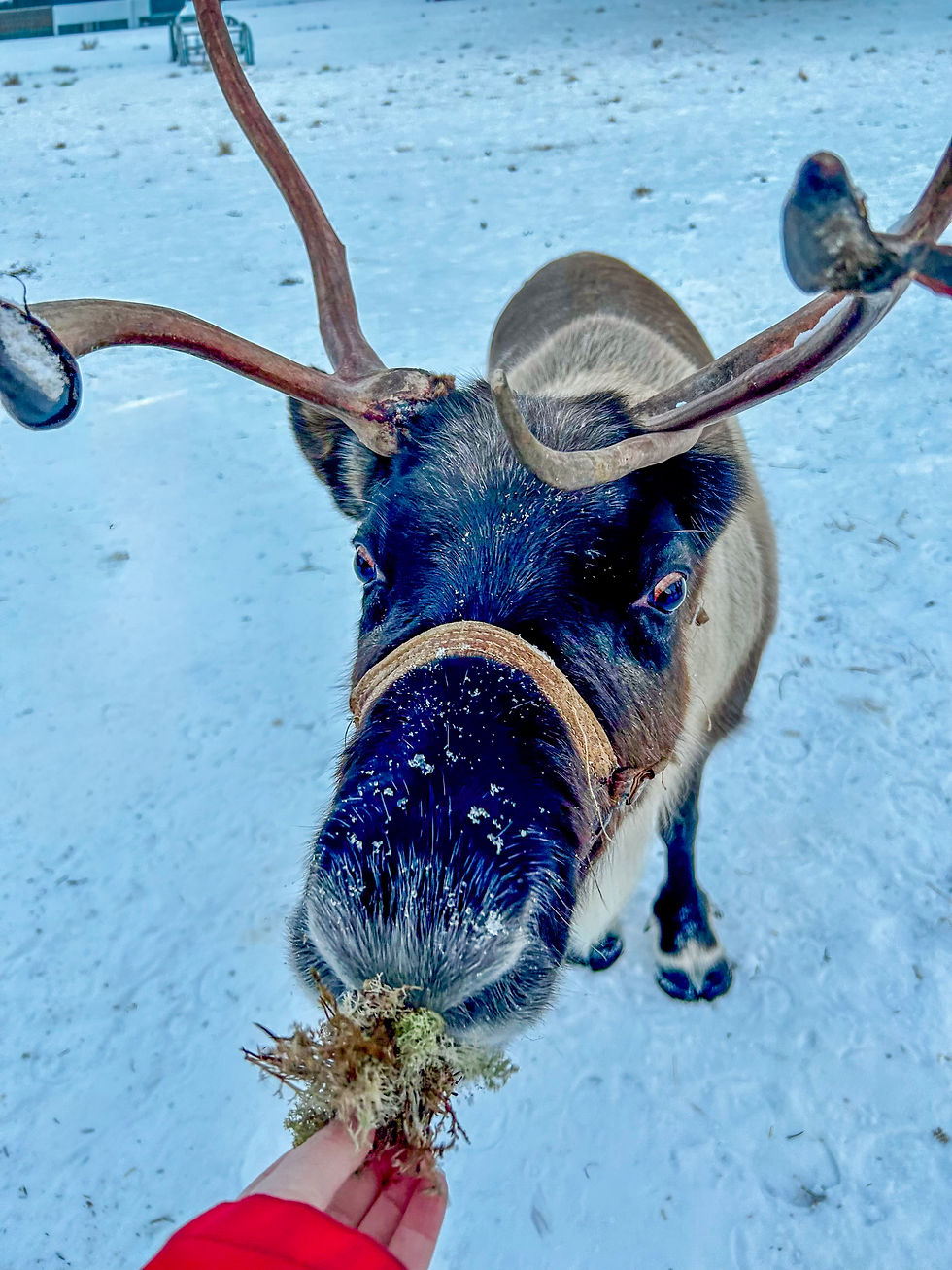
We spent the afternoon slowing down, feeding reindeer at the sami village, and, yes. Eating reindeer at the sami village.
Our last night was insane: dancing northern lights, falling stars, even a comet. It felt like Lapland was giving us one final parting gift.

Day 5 — The Slow Goodbye
The last morning was all about cleaning cabins, packing bags, and pretending we weren’t sad to leave. We had a few hours in Kiruna’s new city center, enough time for coffee, a museum visit, and one last look at the snowy streets.
Then came the airport, the late‑night transfer, and the quiet bus ride back to Norköping. Everyone half‑asleep, half‑thinking about the week we just lived.
Going home tired and emotional, realizing:
“I just witnessed one of the most beautiful places on earth — while still in my twenties.”
Some memories stay with you forever.
Lapland is one of them.
The Most Incredible Things About Kiruna
The Northern Lights.
A Sky That Refuses to Be Ordinary
I’ve dreamed of seeing the northern lights since watching Brother Bear as a kid. It always felt too far away, too expensive, too unpredictable. The kind of thing you don’t plan for, you just hope life surprises you with it someday.
And then Kiruna surprised me every single night.
The aurora isn’t just a “thing you see.”
It’s a concept.
A mood.
A living creature.
One minute it’s barely visible, a soft green haze.
The next, it’s dancing across the sky like someone is drawing with neon crayons in real time.
I saw it in every version:
Green curtains.
Purple streaks.
Slow waves.
Fast spirals.
Shapes that looked like they were breathing.
I was lucky enough to see it every night.
Multiple times. Multiple colors.
And the wildest part?
Ironically, I didn’t see it on the official northern lights tour, I saw it everywhere else.
While cooking.
While walking to the camp fire.
While standing on a frozen lake with a fire burning beside me.
It felt like the sky was performing just for us.
The Stars
Too Many, Too Bright, Too Close
I’ve always been emotional about stars. Going back to the days when camping, fighting sleep just the watch the stars from the hammock with my dad.
But the stars in Kiruna were something else entirely.
These stars were sharp.
Bright.
Unreal.
Like someone had sprinkled glitter across a black velvet sky.
You don’t just look at them , you feel them.
You feel small, but in a comforting way.
Like the universe is big enough to hold everything you’re worried about.
The stars in Kiruna didn’t just shine, they hovered. So close it felt like you could reach out and brush your fingers across them.
Even if the northern lights hadn’t shown up, the stars alone would have made the trip worth it.
The Light
Soft, Low, and Completely Unreal
Lapland light is different.
It doesn’t rise. It doesn’t set. It just glows.
Sunrise becomes sunset.
Sunset becomes twilight.
Twilight becomes stars.
The sky shifts through colors you don’t see anywhere else:
Pastel pinks. Soft oranges. Lavender blues.
A kind of Arctic gold that feels like it’s been painted by someone with too much talent.
Every hour looks like a painting.
The Feeling of Being on Another Planet
Kiruna doesn’t feel like Earth. It feels like a movie set. A simulation.
A dream someone forgot to wake you from.
The snow is deeper.
The trees are heavier.
The air is sharper.
The sky is closer.
Everything feels exaggerated, but in a way that makes you feel more alive, not less.
Most importantly The Feeling You Get When You Leave
The hardest part of Kiruna is leaving. You pack your bags. You clean your cabin.
You take one last look at the snow.
And you realize you’re not the same person who arrived.
You’ve seen the sky move.
You’ve breathed air that felt like glass.
You’ve stood in silence so deep it felt like a reset button.
And you know — truly know — that you’ll never forget it.


Comments